 Proven technology
Peer-reviewed since 2012
Circular · End-of-life
Panels that come apart cleanly, at room temperature.
Conventional EVA-laminated panels are cross-linked solid — recycling them means shredding or high-temperature and chemical processing. Silicone-gel panels separate mechanically at room temperature into glass, cells, and metals: 95–98% material recovery, over 80% direct reuse.
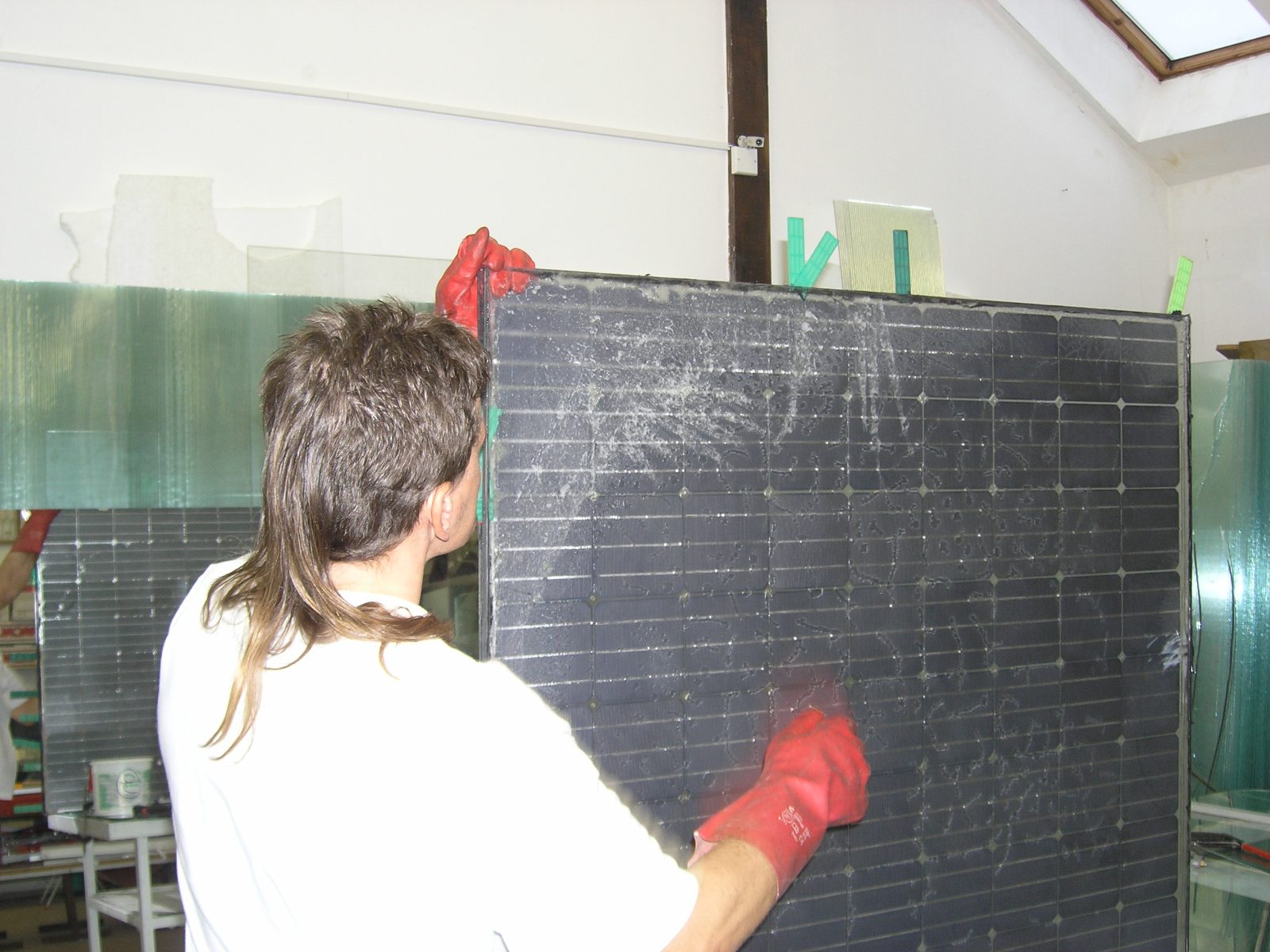
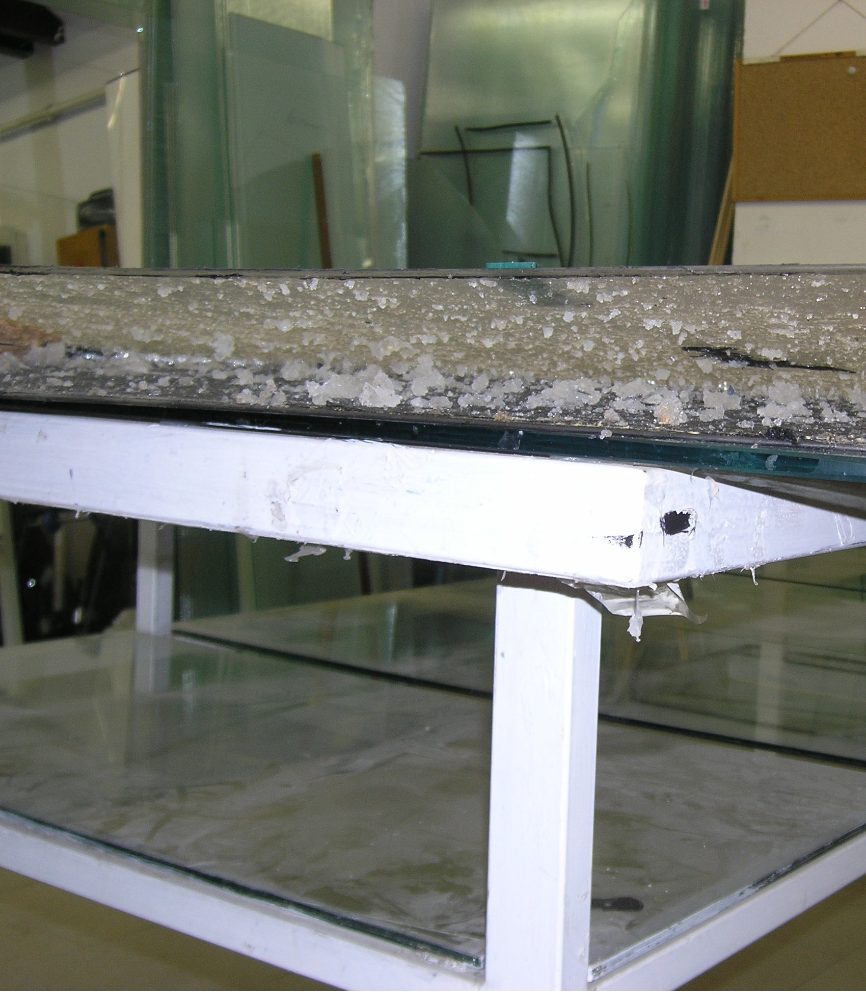
Why it matters
Most panels are built never to come apart.
EVA cross-links permanently, fusing glass, cells, and backsheet into a single laminate. Recovering anything from it means destructive processing — shredding, pyrolysis, or chemical stripping — which yields low-grade material and a hazardous waste stream.
Because silicone gel stays soft, a gel-laminated panel can be taken apart mechanically at room temperature. Solar cells extract intact rather than crushed, glass is recovered clean, and metals separate — closing the loop instead of down-cycling it.
01 · Recovery
95–98% recovered
Almost all of the panel's material is recovered, not down-cycled or landfilled.
02 · Reuse
Over 80% reused
More than four fifths of the components are directly reusable.
03 · Process
Room-temperature
Mechanical disassembly at ~20 °C — no shredding, pyrolysis, or chemical stripping.
04 · Cells
Cells extract intact
Solar cells come out whole, not crushed, so they retain recovery value.
05 · Waste
No hazardous stream
Clean separation avoids the hazardous by-products of destructive recycling.
06 · Circular
Closes the loop
Recovered glass, cells, and metals feed back into circular-economy manufacturing.
Material recovery
High-yield recovery, at room temperature.
The same softness that lets a silicone-gel module be renovated in the field lets it be taken apart at end of life. There is no thermal or chemical step — the laminate is separated mechanically, and the constituents come out clean enough to re-enter manufacturing.
For an asset owner planning a repowering wave, that turns end-of-life from a disposal cost into a recovery of material value.
As waste PV modules fall under the EU WEEE Directive's recovery and recycling obligations, clean mechanical disassembly also keeps end-of-life straightforward to document and account for — instead of a hazardous stream to dispose of.
Poulek & Kozelka (2026) — Rapid five-year repowering & clean recycling, Sustainability 18:3599 ↗
Direct reply by Vladislav Poulek
Request a recycling consultation.
Tell us about the plant and its stage — Vladislav Poulek will reply personally about end-of-life recovery and repowering.