 Proven technology
Peer-reviewed since 2012
Equipment · For panel makers
Laminators that build circular-economy-ready panels.
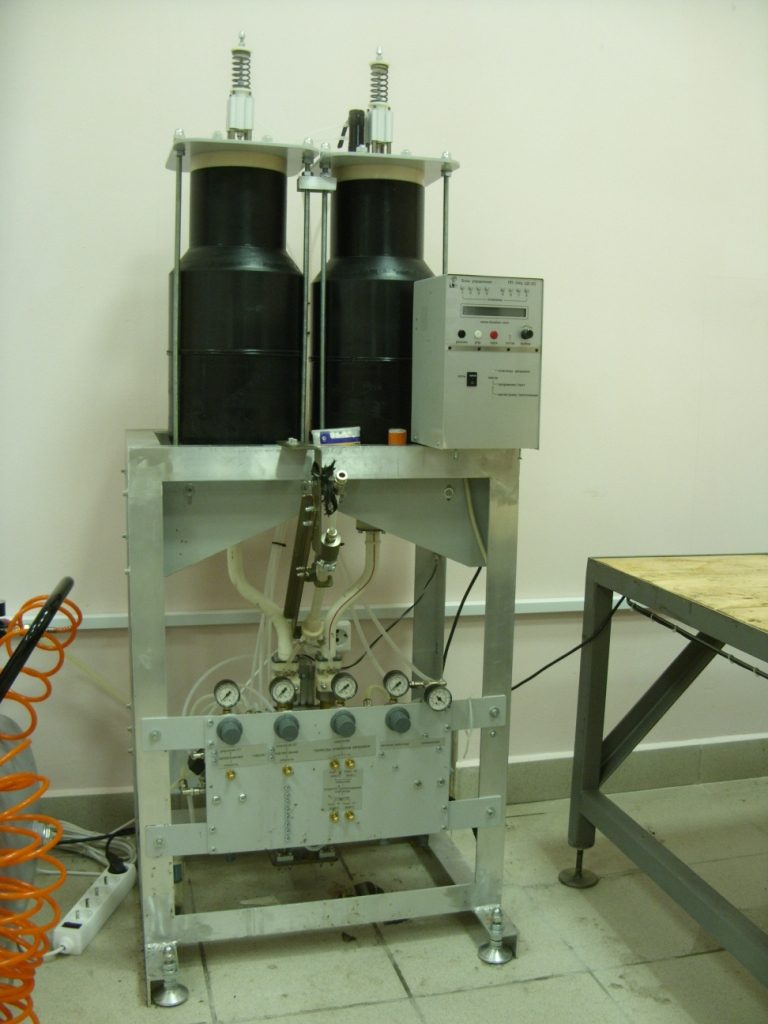
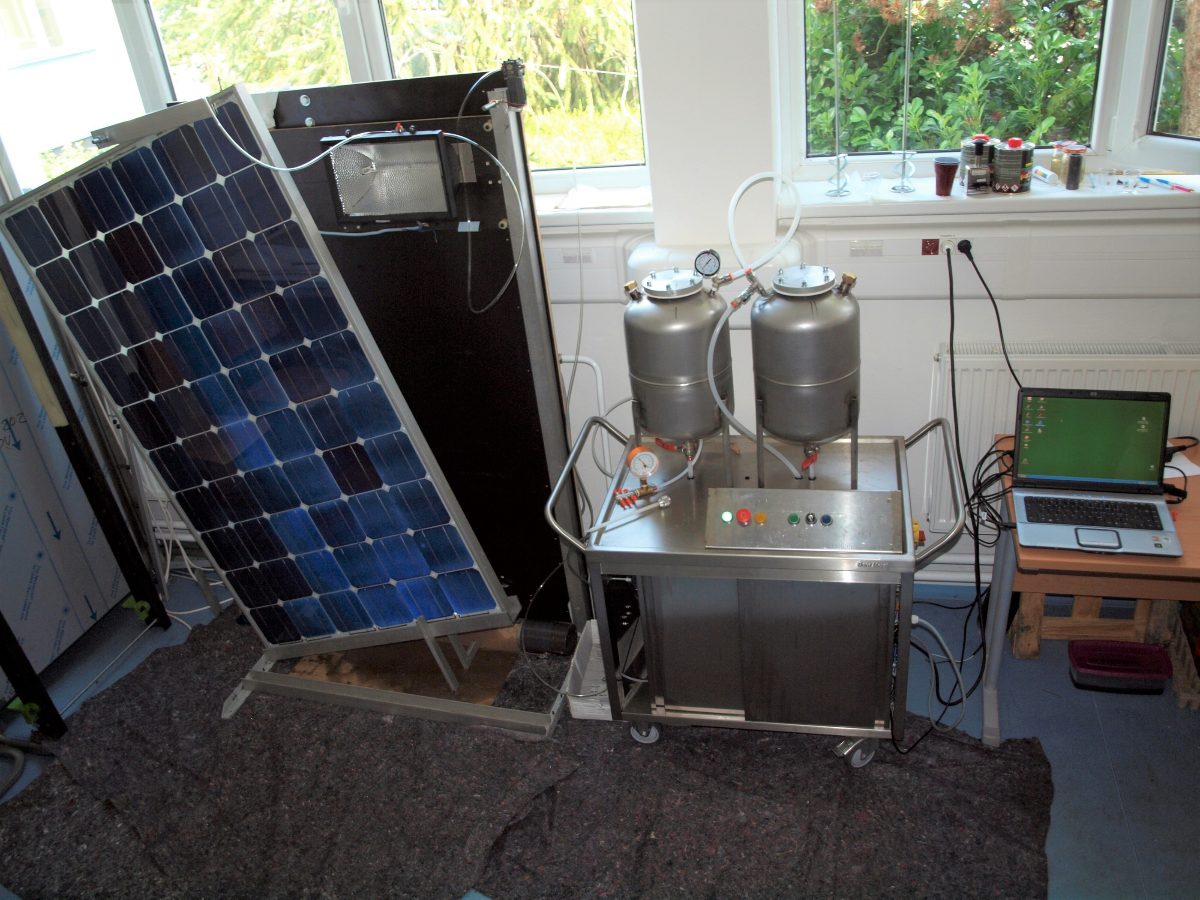
Silicone gel encapsulation equipment for panel manufacturers. The two-component gel cures at room temperature, uses about a tenth of the energy of EVA lamination, and produces modules that stay serviceable in heat and disassemble cleanly at end of life.
What it changes
Lower energy in. Recyclable panels out.
Conventional EVA lamination cross-links the encapsulant in a high-temperature vacuum cycle (~130 °C), drawing roughly 49 kWh per panel and bonding the laminate permanently. Silicone gel cures at ~20 °C for about 4.5 kWh per panel — and stays re-workable.
For a manufacturer, that means a module that is serviceable in the field and mechanically disassemblable at end of life — the property that makes a panel circular-economy-ready. The production cost difference versus EVA is under 0.05 EUR/W.
01 · Process
Room-temperature cure
The gel sets at ~20 °C — no high-temperature vacuum lamination cycle.
02 · Energy
~10× less energy
About 4.5 kWh per panel, against roughly 49 kWh for EVA lamination.
03 · End of life
Disassemblable panels
Modules separate mechanically at room temperature for high-yield material recovery.
04 · Heat
Operates to +110 °C
Output panels run long-term to +110 °C in an encapsulant inert to 250 °C.
05 · Cost
Under 0.05 EUR/W
Production cost difference versus EVA-laminated panels.
06 · Circular
Built for circularity
Panels designed for clean recovery and circular-economy manufacturing.
Why circularity, now
Built for where the rules are heading.
End-of-life PV already falls under the EU's WEEE Directive, which sets recovery and recycling targets for waste modules. The EU is also preparing ecodesign rules for solar panels — measures widely expected to emphasise dismantlability, recyclability, and a digital product passport.
A gel-encapsulated panel is mechanically disassemblable by design, so a manufacturer building one is working with that direction of travel — and the material-recovery economics it implies — rather than retrofitting for it later.
Process comparison
Gel lamination vs. EVA lamination.
| Property | EVA lamination | Silicone gel lamination |
|---|---|---|
| Process temperature | ~130 °C, vacuum | ~20 °C, room temperature |
| Energy per panel | ~49 kWh | ~4.5 kWh |
| Laminate | Permanently cross-linked | Re-workable; stays soft |
| End of life | Bonded; hard to separate | Disassembles at room temperature |
| Panel operating range | up to +85 °C | up to +110 °C |
Equipment is supplied to panel manufacturers as encapsulation lines, with throughput configured to the production target. We also work with partners on larger-scale lamination capacity under a technology-plus-manufacturing partnership model.
Direct reply by Vladislav Poulek
Request equipment specifications.
Tell us your production target and region, and whether you are evaluating equipment or a manufacturing partnership — Vladislav Poulek will reply personally.