 Proven technology
Peer-reviewed since 2012
Manufacture · For desert & tropics
Solar panels that stay inert where heat destroys EVA.
Standard EVA-laminated modules are rated for long-term operation only to about +85 °C — yet in deserts and on hot roofs, panel temperatures reach +95 °C. TRAXLE panels encapsulated in silicone gel (PDMS) run long-term to +110 °C, in an encapsulant that stays chemically inert to 250 °C.
Why silicone gel
An encapsulant that doesn't age with the panel.
A photovoltaic module is only as durable as the polymer that seals its cells. Standard EVA (ethylene-vinyl acetate) is a cross-linked plastic: in sustained heat and humidity it yellows, embrittles, and hydrolyses — releasing acetic acid that corrodes the cell metallisation and contacts. Series resistance climbs, the softened laminate takes on moisture, and the module's insulation resistance drops — the loss a wet-state test later reveals. The degradation is gradual, cumulative, and irreversible.
Replacing EVA with silicone gel (polydimethylsiloxane, PDMS) changes the ageing behaviour. The gel is chemically inert, hydrophobic, and optically stable — and because it stays soft, the same panel can be renovated in the field and, at end of life, separated cleanly into its raw materials.
01 · Thermal
Inert to 250 °C
Panels run long-term to +110 °C, where standard EVA modules are capped near +85 °C.
02 · Moisture
Hydrophobic
Repels water and holds insulation resistance under dew, fog, and salt mist.
03 · Optics
No yellowing
Transmits ~90% at 360 nm where aged EVA falls to ~8%, so the panel keeps its short-wavelength response.
04 · Yield
More energy in the sun
About 1.5% higher output at start, and up to ~15% more energy over a 20-year life from the absence of browning.
05 · Service
Re-workable on site
Cured at room temperature (~20 °C), so degraded modules are renovated where they stand instead of being scrapped.
06 · End of life
Clean disassembly
Glass, cells, and metals separate mechanically at room temperature for high-yield material recovery.
Comparative data
Silicone gel vs. EVA encapsulant.
| Property | EVA (standard) | Silicone gel (PDMS) |
|---|---|---|
| Encapsulant range | −40 to +80 °C | −60 to +250 °C |
| Panel long-term operation | up to +85 °C | up to +110 °C |
| Corrosive by-products | Acetic acid — laminating and ageing | None |
| UV resistance | Low; yellows and browns | High; no discolouration |
| Transmission at 360 nm | ~8% | ~90% |
| Moisture behaviour | Absorbs water; hydrolyses | Hydrophobic; water-repellent |
| Elastic modulus | 10 N/mm² — rigid | 0.006 N/mm² — stays soft |
| Lamination | ~130 °C · ~49 kWh per panel | ~20 °C · ~4.5 kWh per panel |
| Field repair & end of life | Not re-workable; cells and glass bonded | Renovate on site; disassembles at room temp |
Field record
Rated above the heat that limits standard panels.
In deserts and on hot industrial roofs, module temperatures climb to about +95 °C — already past the +85 °C long-term rating of conventional EVA-laminated panels, where the encapsulant softens and the acetic-acid cycle begins.
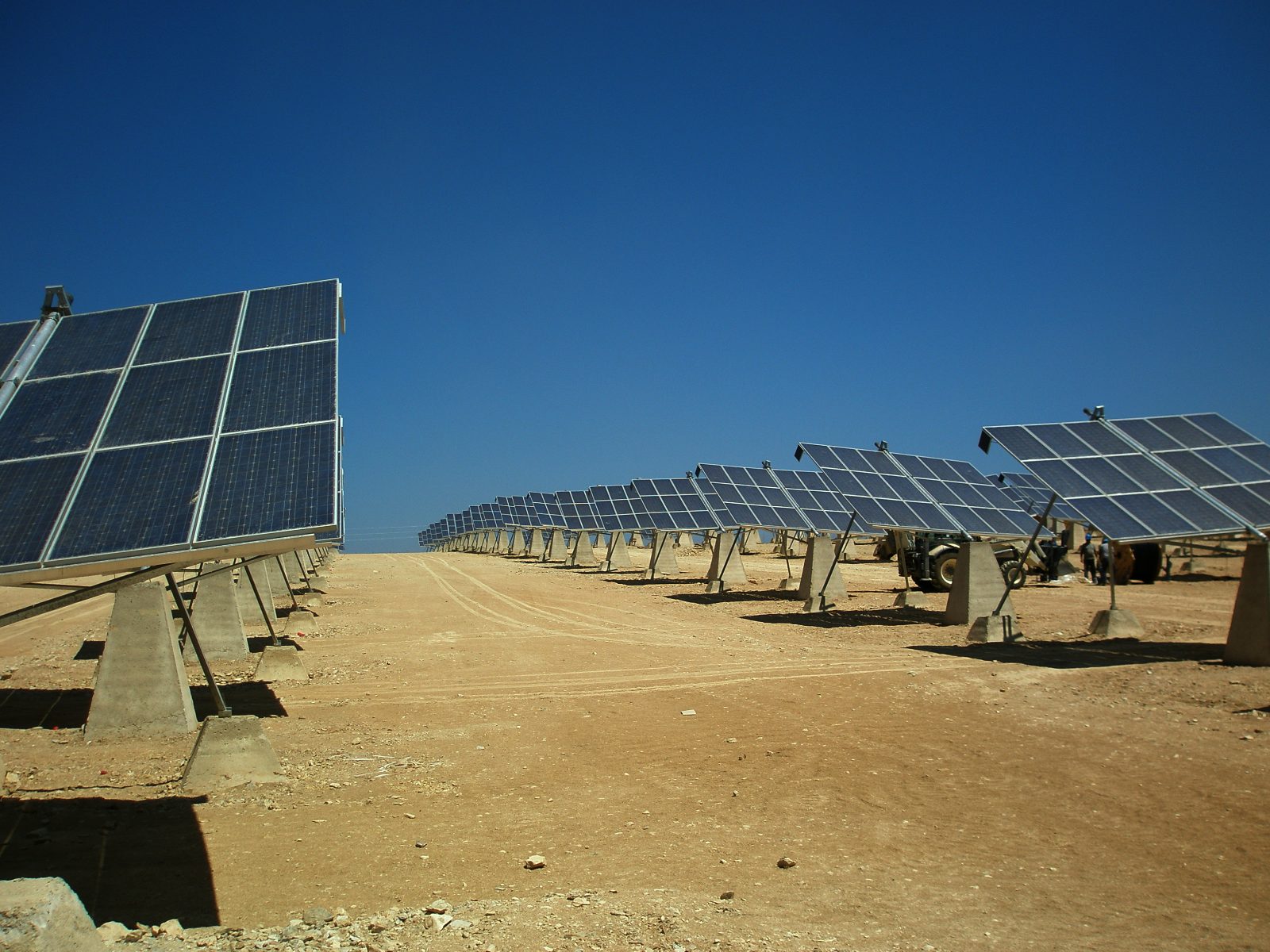
TRAXLE silicone-gel panels are rated for continuous operation to +110 °C, in an encapsulant that stays inert to 250 °C — the margin that lets them run in installations like Huelva (Spain) and the Hongsipu desert plant in Ningxia, China.
DesertStar 610 W PDMS-gel laminated panel — datasheet (PDF) ↓
Direct reply by Vladislav Poulek
Request panel specifications.
Tell us the climate, capacity, and timeline for your installation — Vladislav Poulek will reply personally with specifications and a quotation.